
The Shift in Web Design: What Smart Businesses Are Asking Before They Build
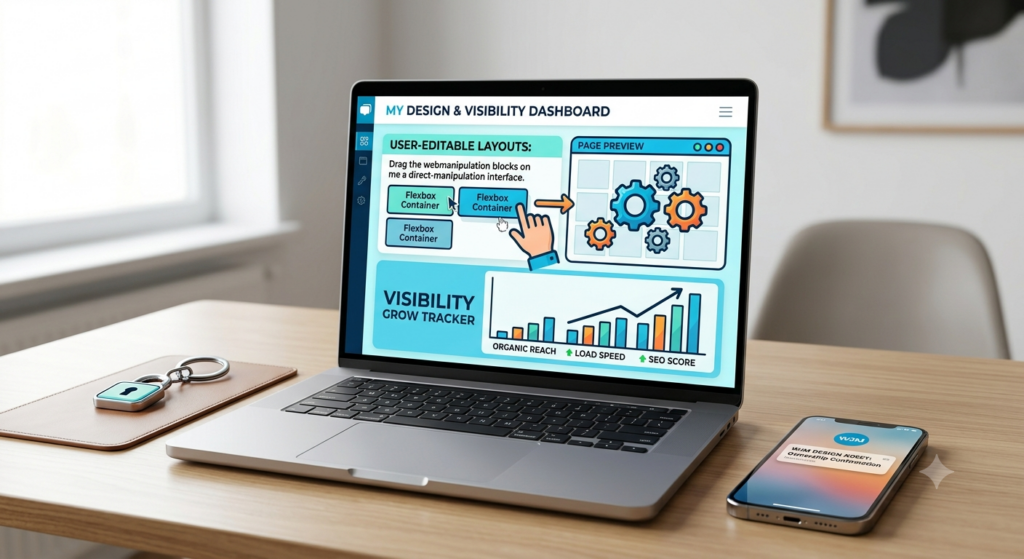
The Shift in Web Design: What Smart Businesses Are Asking Before They Build There was a time when hiring a web designer was simple. You looked at a portfolio, picked a style you liked, and paid a fee for a beautiful homepage. But the digital landscape has changed. Today, business owners and consumers are smarter, more strategic, and highly aware that a website isn’t just an online business card—it’s an investment. Because launching a site has become easier, the questions people ask before signing a contract have shifted from basic aesthetics to ownership, autonomy, and performance. If you are looking to build a new website or redesign an existing one, these are the exact questions you should be asking to ensure you get a powerful, scalable business tool. 1. “Can I make edits myself without breaking the layout?” Nobody wants to be held hostage by a developer just to change a line of text, swap out an image, or post a new article. The modern consumer demands autonomy. When interviewing a designer, ask about the backend structure. The Old Way: Rigid templates or custom code that requires a developer for every tiny tweak. The Modern Way: Clean, modular setups using modern visual builders (like Elementor paired with Flexbox Containers). This approach allows you to easily drag, drop, and edit text inside a safe, structured grid without throwing the entire mobile layout out of alignment. 2. “Who actually owns the domain, hosting, and assets?” One of the biggest pain points for business owners is “developer lock-in.” Too many clients discover too late that their agency registered the domain under the agency’s name, or that they don’t have administrative access to their own hosting account. Before any design work begins, ensure absolute transparency: Accounts: Your domain, website hosting, Google Analytics, and Google Search Console should always be registered under your business email. Your designer should be granted manager access, not total ownership. Branding Assets: Ensure your contract explicitly states that you own the rights to all original source graphics, logos, and custom layout assets upon project completion. 3. “Is SEO built into the foundation, or is it an add-on?” A beautiful website is completely useless if your customers can’t find it on Google. Consumers are waking up to the fact that Search Engine Optimization (SEO) isn’t a magical plugin you install right before launching; it has to be baked into the design itself. A high-performing site relies on a foundation of clean code, semantic page hierarchies ($H1$, $H2$, $H3$ tags), and proper image compression. Furthermore, with Google’s strict focus on mobile indexing, your site must load fast. If a design looks stunning on a desktop but takes five seconds to chug to life on a mobile phone, it will bleed leads and drop in search rankings. 4. “What is the exact scope for revisions and content?” Projects often stall or go over budget due to a breakdown in communication regarding content and revisions. Clear guardrails protect both you and your investment. Always clarify two things upfront: The Revision Process: How many rounds of design changes are included in the initial quote? (A standard, professional agreement typically includes 2 to 3 structured feedback loops). The Content Bottleneck: Who is writing the words and sourcing the images? If you are expected to provide all the copy, make sure you know the deadlines so the project doesn’t hit a wall. The Core Checklist for Your Next Project What to Avoid What to Look For Proprietary CMS platforms that make it impossible to move your site later. Open-source, flexible platforms (like WordPress) that give you total portability. Dense, heavy graphics that slow down mobile page load times. Performance-first typography, lightweight SVG visuals, and lightning-fast loading speeds. Hidden monthly maintenance fees just to keep the site online. Transparent pricing and an intuitive backend that you can manage yourself. The Bottom Line: A truly great web designer doesn’t just hand over a pretty set of pages. They deliver a high-performing digital asset built with integrity, ensuring that you have total control, clear ownership, and the tools you need to grow your business for years to come. Ready to build a site you actually control? Don’t settle for a locked-down system or a slow-loading template. Let’s build a fast, responsive, and easy-to-manage website that positions your business exactly where it needs to be. [Contact WJM Digital Design today to chat about your project!] Contact Us
The Shift in Web Design: What Smart Businesses Are Asking Before They Build Read More »